The placement of a living room rug is not just a matter of aesthetics, but an organizational decision that has a significant impact on the harmony and comfort of your home. Whether your interior is classic or modern, choosing the right size, material, and layout will help ensure that your rug is not just a decorative element, but also a functional centerpiece in your living room. Whether the room is small or large, a well-placed rug can tie the space together, highlight the furniture, and create a pleasant atmosphere.

Why is the placement of a living room rug important?
The placement of a living room rug plays a key role in creating visual balance in the interior. A well-chosen and precisely placed rug can connect separate pieces of furniture, frame the space, and direct the eye's movement around the room. For example, if the rug is too small or does not fit properly in front of the furniture, the overall look of the room can become fragmented and disorderly, even if the furniture and decorations are otherwise harmonious.
According to interior design experts, the visual impact of a rug is often greater than that of a sofa or coffee table. A well-placed, appropriately sized rug can frame the seating area, visually enlarge or shape the space, and create a pleasant transition between the floor covering and the furniture. In addition, carpets are also important from an acoustic and thermal point of view: they reduce echo and increase comfort.

Last but not least, the placement of a rug in the living room also supports the functionality of the home. A correctly positioned rug helps to create different areas – for example, separating the lounge, reading corner or TV area – and also makes it easier to move around. That is why placing a rug is not just a matter of decoration, but also a conscious decision about how to organize the space, which directly contributes to the livability of the living space.
How to choose rug size for living room
Choosing the right size living room rug is one of the most important, but often underestimated, steps in furnishing a room. A rug that is too small will get lost among the furniture, while one that is too large can make the room feel crowded – both of which ruin the proportions of the space. To find the ideal size, you need to consider the size of the room, the furniture, and the space you want to create.
The most commonly used living room rug sizes are: 160x230 cm, 200x300 cm, and 300x400 cm. In a smaller living room or with a smaller seating arrangement, a 160x230 cm rug is usually sufficient, as it can bring together the coffee table and the seating around it. For medium-sized living rooms – where, for example, there is a 3-2-1 sofa set – a 200x300 cm rug may be the ideal choice. In large, open spaces where the furniture floats in the room, a 300x400 cm rug provides the necessary proportion and visual connection.

Experts recommend always measuring the available space accurately and drawing up a layout plan before placing a rug in the living room. It is worth choosing a rug that is at least 20-30 cm away from the walls and harmoniously connects with the furniture arrangement. If you are unsure, you can use masking tape on the floor to visually simulate the planned carpet size. This will help you imagine how the space will look with the chosen size.
Types of living room carpets – classic and modern solutions
When choosing a living room rug, it is not only the size and material that matter, but also the style of the rug. The type determines the atmosphere of the space and plays a key role in shaping the character of the home. There are two main styles: classic and modern living room rugs.
Classic rugs are made with traditional patterns, such as medallion center designs, Persian-style border decorations, and subtle color transitions. These are often hand-knotted or machine-woven imitations. They are recommended for more elegant, timeless interiors where the goal is to create warmth, coziness, and prestige. Classic-style rugs go well with wooden furniture, antique objects, or vintage interior design elements.
Modern rugs, on the other hand, have cleaner lines and often feature geometric patterns, abstract motifs, and pastel or contrasting colors. Minimalist designs or deliberately irregular shapes are common. These are ideal for Scandinavian, loft, or minimalist interiors, where the emphasis is on simplicity and functionality. Among modern rugs, single-color, flat-woven, or vintage-style models are also popular.

It is important that the type of carpet you choose harmonizes with the rest of the room, whether it be the color of the walls, the material of the furniture, or the lighting. Of course, there are transitions between classic and modern trends, so you can even create an eclectic, unique interior by consciously combining different style elements.
What material should the living room carpet be made of?
The material of the living room rug not only determines its aesthetics, but also its durability, maintainability, and comfort. That is why it is worth getting to know the different rug materials thoroughly before buying, so that we can choose the one that best suits the style and usage habits of our home.
One of the most popular natural materials is wool, which has excellent thermal insulation and sound absorption properties. It is durable, soft to the touch, and long-lasting, making it an ideal choice for high-traffic living rooms. The downside is that it is in a higher price range and requires some care, such as regular vacuuming and occasional airing.
Synthetic carpets – made from materials such as polypropylene, polyester, or nylon – offer excellent value for money. They are resistant to stains and dirt and are easy to keep clean. They can also be beneficial for allergy sufferers as they retain less dust and mites. These materials are particularly useful for families with children or pets, where carpets are subject to frequent use.
Carpets made from eco-friendly and recycled materials, such as natural jute, acrylic, bamboo, or cotton, are becoming increasingly popular. They offer an environmentally conscious alternative for the living room. However, it is important to note that these materials are generally less durable and are therefore recommended for rooms with less traffic.

When choosing a material, it is therefore worth considering your family's lifestyle, how often you have guests, cleaning options and, last but not least, your budget. A rug made from the right material will not only be beautiful, but also a practical and durable part of your home.
What is the rule on rugs in a living room?
The placement of the living room carpet will be most effective if it is in close harmony with the arrangement of the furniture. A well-positioned carpet is not only aesthetically pleasing, but also functionally determines the organization of the space. One of the most common mistakes is when the rug is too small and the furniture "slips" around the space – in contrast, a rug of the right size and position brings the seating arrangement together, creating a focal point and suggesting unity.
According to classic interior design rules, there are three basic ways to position a rug in the living room:
- All furniture on the rug: In this case, all legs of the seating area (sofa, armchair) stand on the rug. This is ideal in particularly large spaces, where the rug visually "frames" the zone and optically brings the space together. As a rug dealer, I do not recommend this, as the part of the rug on which the furniture is placed is not visible, so buying such a large living room rug is a waste of money.
- Only the front legs on the rug: This is the most common solution for medium-sized living rooms. The front legs of the sofa and armchairs are on the rug, while the back legs are on the floor. This also suggests unity, but can be achieved with a smaller rug size. E I do not recommend this solution either, as the legs of the furniture can damage the rug over time.
- The rug is placed in front of the furniture: This solution is practical in every respect. In this arrangement, the rug is placed exclusively under the coffee table, while its size is partly adjusted to the width of the sofa. At most, the legs of a smaller and less heavy chair may touch the rug. It is separated from the sofa by a few centimeters. This solution is both aesthetic and functional, as it creates a tidy overall effect, while making the space appear spacious and harmonious. Not to mention that our rug will have a long life this way. (...and the carpet dealer will be happy too :) !)
It is important to note that the carpet should extend no more than 20-30 cm beyond the edges of the furniture. In addition, make sure that the carpet does not interfere with the opening of doors or passageways, and does not bunch up under furniture, as this can cause discomfort in the long run and may even be a hazard.
Popular rug size for living rooom: 160x230, 200x300, 300x400 cm
When choosing the size of a living room rug, the most important considerations are the floor space of the room and the placement of the furniture. The three most popular sizes – 160x230 cm, 200x300 cm, and 300x400 cm – are suitable for different interior design purposes and fit perfectly into different room sizes.
A 160x230 cm rug is the ideal choice for smaller living rooms, studio apartments, or spaces where the furniture is relatively close together. This size is perfect for under a coffee table or an armchair reading corner, and can be particularly practical if the layout of the room does not allow for larger rugs.

The 200x300 cm rug offers more spacious options and is one of the most popular choices for medium-sized living rooms. This rug comfortably accommodates a sofa and surrounds the coffee table, visually connecting the central elements of the living room. This size fills the space proportionally, while still leaving free traffic zones around it.

The 300x400 cm rug really comes into its own in large living rooms or open-plan spaces. It is a practical size if you want to connect the sofa to the wall. Large rugs are particularly elegant and create a harmonious effect, as they bring together different pieces of furniture and zones. However, care should be taken to ensure that the rug does not touch the wall directly, but leaves at least 20-30 cm of space around it, so that the space remains airier.

Before choosing a size, it is worth measuring the available space carefully or marking out the possible carpet outline with masking tape, so that it is easy to visualize which size fits best in the given space.
The role of colours and patterns in the atmosphere of the living room
The colour and pattern of the living room rug play a decisive role in shaping the atmosphere of the room. The right color scheme not only provides a visual experience, but can also have a psychological effect on those in the space, while patterns help to bring dynamism to the interior or subtly complement it.
Light-coloured rugs—such as beige, cream, light gray, or pale blue—make the space feel more spacious and airy. They are especially recommended for small living rooms where it is important to increase the feeling of space. These colors create a clean, calm atmosphere and can be easily combined with different furniture colours.
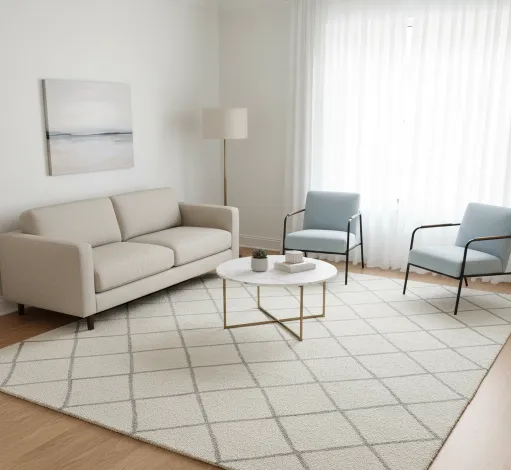
In contrast, darker shades—such as dark brown, graphite, navy blue, or burgundy—add character to the living room and create a warmer, more intimate atmosphere. They work well in larger spaces and can be particularly striking when combined with light-colored walls and floors. At the same time, dust and dirt are less noticeable on them, which can be practical in busy rooms.

Patterned rugs – whether classic medallion, geometric, abstract, or even floral designs – can dramatically enhance your living room, especially if the furniture is in more neutral tones. Patterns can distract attention from any unevenness or wear and tear, but they also have a strong visual impact, so it is important that they are not too dominant if the room already has strong visual elements.
When choosing the ideal colour and pattern, it is worth considering the overall color palette of your home as well as the amount of natural light. A well-chosen rug can bring the different elements of a room together and give the space a stylish character, whether it is a classic or modern interior.
Tips for stylish and functional carpet arrangement
Placing a carpet in the living room is not just about size and color – practical and aesthetic arrangement is key to making the carpet a truly integral part of the space. The following interior design tips will help you use your rug not only as decoration, but also as a conscious space-shaping element.
- Define the function of the rug: First, think about the role you want the rug to play: should it be purely decorative, or should it also define the space? If, for example, the living room has been designed as an open-plan space, a rug can be used to visually separate the seating area from the hallway or dining area. In this case, it is worth choosing a larger, more striking rug.
- Furniture in the center: A rug arrangement that matches the living room furniture creates a harmonious overall picture. For example, if the coffee table is the focal point of the room, the rug should be adjusted to it. The carpet should reach the front legs of the sofa and armchairs. If the carpet is too far away from the furniture, the space can become disjointed.
- Proportions and spatial effect: Make sure that the carpet is in proportion to the floor space. A rug that is too large can overwhelm the rest of the space, while one that is too small can disappear into it. It is recommended that at least 20-30 cm of floor space be left free along the walls from the edge of the rug. This creates a more airy, structured effect.
+1 tip: Use an anti-slip underlay!
An anti-slip underlay placed under the rug not only increases safety, especially in households with children or elderly people, but also helps the rug lie flat and prevents it from creasing or sliding on the floor.
Well-thought-out carpet arrangement does not require a huge investment or a complete rearrangement, just awareness and a sense of proportion. With these few simple but effective tips, your living room will not only be beautiful, but also tidy and comfortable.
Ultimately, a rug is not just an accessory: it gives the space identity, character to the living room, and comfort to everyday life. If we choose it with the right considerations in mind, we can enjoy it in the long term – visually, functionally, and emotionally. It is therefore worth making a conscious decision and adapting the placement of the rug to the style and usage habits of the entire apartment.
FAQ – Frequently Asked Questions about placing rugs in the living room
- What size rug should I choose for a 20 m² living room?
A 200x300 cm rug is usually the ideal choice for a 20 m² living room. This size is large enough to accommodate the front legs of the sofa and the coffee table, while leaving enough free floor space around the room.
- Can I use two rugs in one living room?
Yes, but it is important that the two rugs harmonize with each other in style, colour, and pattern. You can also create two different zones with them, such as a sitting and reading corner, but be careful not to create competing focal points in the space.
- How should I position the rug in relation to the sofa?
The most common and aesthetic solution is to place the rug no more than 5 cm from the front legs of the sofa. This visually connects the furniture and creates a unified, orderly impression. There is no point in placing the entire sofa on the rug.
- Which rug material is best if there are small children in the family?
In households with small children, it is worth choosing a rug made of polyester or acrylic, which is easy to clean and durable. These rugs are stain-resistant and less sensitive to mechanical damage.
- What colour rug should I choose for light-colored walls?
Medium-toned or darker rugs, such as grayish blue, brown, or dark green shades, look good with light-colored walls. They create contrast, highlight the furniture, and add depth to the space without visually overwhelming the living room.
If you want your living room to be not only beautiful but also harmonious and comfortable, don't leave the choice of carpet to chance! Browse the extensive selection at CarpetDepo, where you will find a wide range of high-quality classic and modern living room rugs.
🎯 Don't just choose a rug – add character to your home!