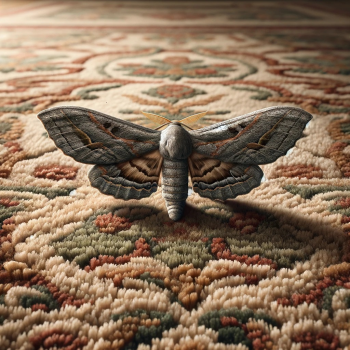
A rug is not only a decoration for your home, but often a valuable investment that, with proper care, can retain its original beauty for many years. However, like all valuable items, rugs also require protection against certain natural enemies, such as moths.
Moths are no joke, and once they get into your home, they can be very difficult to eliminate. Suddenly, they seem to appear everywhere — even on your rugs. They leave no trace during the day, but at night they become active and attack your rugs and clothes. The fight against them can feel never-ending, because if we fail to pay attention to the details, they will return immediately.
The life cycle of moths consists of several stages, which is essential to understand for effective protection. Moths develop over a period of around 10 weeks. Female moths live only for a few days, but during that time they continuously lay eggs. The white eggs hatch into larvae within one or two weeks, and the larvae then continue to develop for another eight to ten weeks. If we find larvae on the ceiling, they are migrating in search of a more favorable place where they can transform into moths within a week or two — that is, if we allow them to do so.

Here’s how to get rid of moths!
Different species within the moth family grow on animal-based diets, such as silk, wool, or fur. Although moths are natural scavengers, they no longer find much carrion in modern environments, so they turn to invading our homes. Moth larvae, however, feed on plant debris, oily seeds, and dried vegetables and fruits. Both types can cause enormous damage to our homes, including to our favorite rugs.

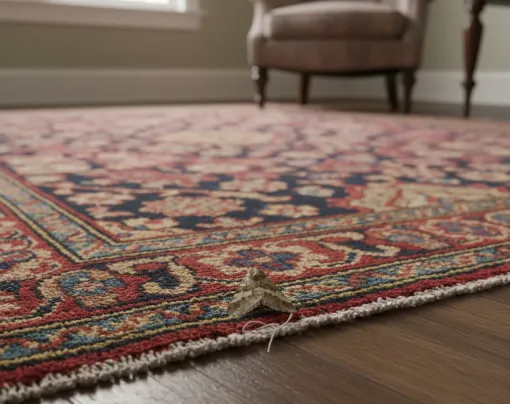
When they fly past us as small, dust-coloured moths, the damage has already been done. The real pest is not the adult moth, but the larva. It is the larva that leaves behind a web-like residue woven from its excrement in flour, grains, or anything else it can access. However, they are very difficult to spot, as they live and reproduce in hidden places — on the ceiling, on the walls, behind furniture, or under carpets. Moths hide during the day and become more active at night. Therefore, it is important to regularly check the corners of carpets and the areas underneath them, where moths like to hide.
Moths love airless, enclosed spaces. If you want to prevent them from destroying everything, regularly move and reorganise items in your closets, pantries, and garages, and make sure to vacuum under carpets frequently. Tilted windows are not enough; you need proper cross-ventilation.
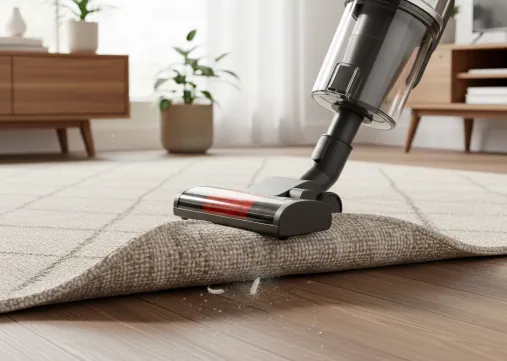
Moths prefer hard-to-reach places, so entire colonies can settle behind wardrobes and under carpets. The back of the refrigerator can also pose a risk. They can lay their eggs in these areas, allowing their offspring to develop in complete safety.
They also thrive in high temperatures and high humidity, conditions that cause larvae to hatch from eggs within two weeks and begin feeding voraciously. Their development can take anywhere from three months to several years, and to add to the “good news,” they can survive for up to eight months without food. This is why regular ventilation is so important, as it is an excellent way to control humidity and temperature.
Moths are not members of the “clean yard, tidy house” movement. Regular cleaning is essential, and food stored in the pantry should be checked frequently. Do not leave anything open, and keep in mind that moths can easily chew through bags, so it is wise to store flour, spices, and anything else they could get into in sealable metal or glass containers.
Essential-oil vapour is also effective for keeping moths away. They particularly dislike the scent of lavender, but eucalyptus can also work very well. Generally, the stronger the scent, the more moths will avoid it. This is why it can be useful to place lavender soap or dried lavender among your clothes or under your carpet, or even hang a bouquet of lavender in your garage. Over time, however, the flowers will fall off, so it is best to hang them in you bedroom.
You can also purchase various moth traps and pesticides. Sticky traps containing pheromones are not designed to eradicate moths, but they are excellent for identifying whether moths have actually disappeared or are still present in your home. When using different products, consider the coverage area and place the appropriate quantity accordingly. There are products specifically designed for food-attacking moths and textile-eating moths, as well as tools to protect carpets. Lavender, however, can be used anywhere, as no moth likes it.
Larvae cannot tolerate extreme cold or heat. It is therefore a good idea to place freshly purchased flour, rice, and spices in the freezer for a day so that any larvae present inside cannot hatch. It is also advisable to sift rice and flour to further reduce the risk.
It is worth washing kitchen cabinets with vinegar water, as this disinfects surfaces and moths dislike the smell of vinegar. If you find larvae in any food, discard it immediately. Do not leave it in the indoor rubbish bin, as moths also feel very comfortable there.

What is the best way to store a rug?
Proper rug storage is essential for preserving the condition of your rugs, whether you are storing them for a short or long period of time.
Before storage, it is advisable to clean the carpet thoroughly to remove dust, dirt, and any stains. Depending on the material of the carpet (wool, silk, cotton), it is best to have it cleaned by a professional, as they have the appropriate tools and expertise to handle different materials. After cleaning, ensure that the carpet is completely dry, as moisture can lead to mould and mildew growth.
It is recommended to store the rug rolled up, as this helps preserve its shape and prevents creasing. When rolling, the patterned side of the carpet should be rolled inwards to provide additional protection against dirt and moths. Before rolling the carpet, sprinkle dried lavender leaves on its surface. This will offer greater long-term protection against moths.

The rug should be stored in a dry, cool place, preferably away from direct sunlight. Basements and attics are generally not ideal due to their higher humidity levels. If you plan to store the rug for a longer period, it is advisable to choose a location that offers protection against high temperatures and fluctuating humidity.
It is advisable to store rugs off the ground—for example, on pallets or shelves—to prevent moisture accumulation and reduce the risk of damage caused by rodents.
It is recommended to wrap rolled-up rugs in a breathable material, such as cotton sheets. This helps protect against dust and other contaminants while ensuring proper ventilation. Avoid using plastic, as it can trap moisture and lead to mould.
Check the rug regularly during storage for any signs of pests. It is recommended to unroll and air the rug every few months to prevent musty odours and keep it fresh.
By following these steps, you can ensure that your rugs retain their quality and beauty even during long-term storage.

How to protect a wool rug from moths?
Regular cleaning and airing: Vacuum and clean your wool rug regularly, paying particular attention to hard-to-reach areas. Regular airing helps reduce humidity, which encourages moths to breed.
Use essential oils: Lavender, eucalyptus, and other strong-smelling oils not only provide a pleasant scent but can also be effective in repelling moths. Place lavender under your wool rug or use an essential-oil diffuser in the corners of the room.
Moth repellents and traps: There are various moth repellents and traps on the market that attract moths with pheromones, making them easier to identify but not effective for eliminating them. Place these products in strategic locations, such as in closets and near carpets.
Use of heat and cooling: Moth larvae do not tolerate extreme temperatures well. When cleaning wool rugs, exposing the materials to high temperatures for a short period (e.g. steam cleaning) can help kill moths and their larvae.
Protecting natural materials: Since moths are particularly attracted to natural materials such as wool, it is important to treat them with special care. Use natural moth repellents such as dried lavender or cedar-wood pieces, which not only protect your wool rugs but also provide a pleasant scent.

Professional cleaning and maintenance: From time to time, it is worth seeking professional help to deep-clean your rugs. Professional rug cleaning helps remove moths, larvae, and potentially dangerous eggs, ensuring the longevity and aesthetic value of your rug.
Getting rid of moths is not just about protecting your rugs but requires comprehensive attention to every part of your home. Prevention and early detection are key to ensuring that our rugs retain their beauty and value in the long term. We hope that our advice will help you protect your rugs more effectively against moth damage, allowing them to retain their splendour and functionality for years to come.